Top 10 Truck Accident Lawyer | Hundreds of Cases Won | No Fee Unless We Win
Truck traffic through Austin puts drivers at risk every day. Nearly a quarter of a million commercial semi trucks travel through Austin every day, making I-35 the number one most congested corridor for truck traffic in all of Texas. There is simply no room for error in traffic like this. When a trucker makes a mistake on Ben White Boulevard, MoPac, or US-183, the consequences fall on you.
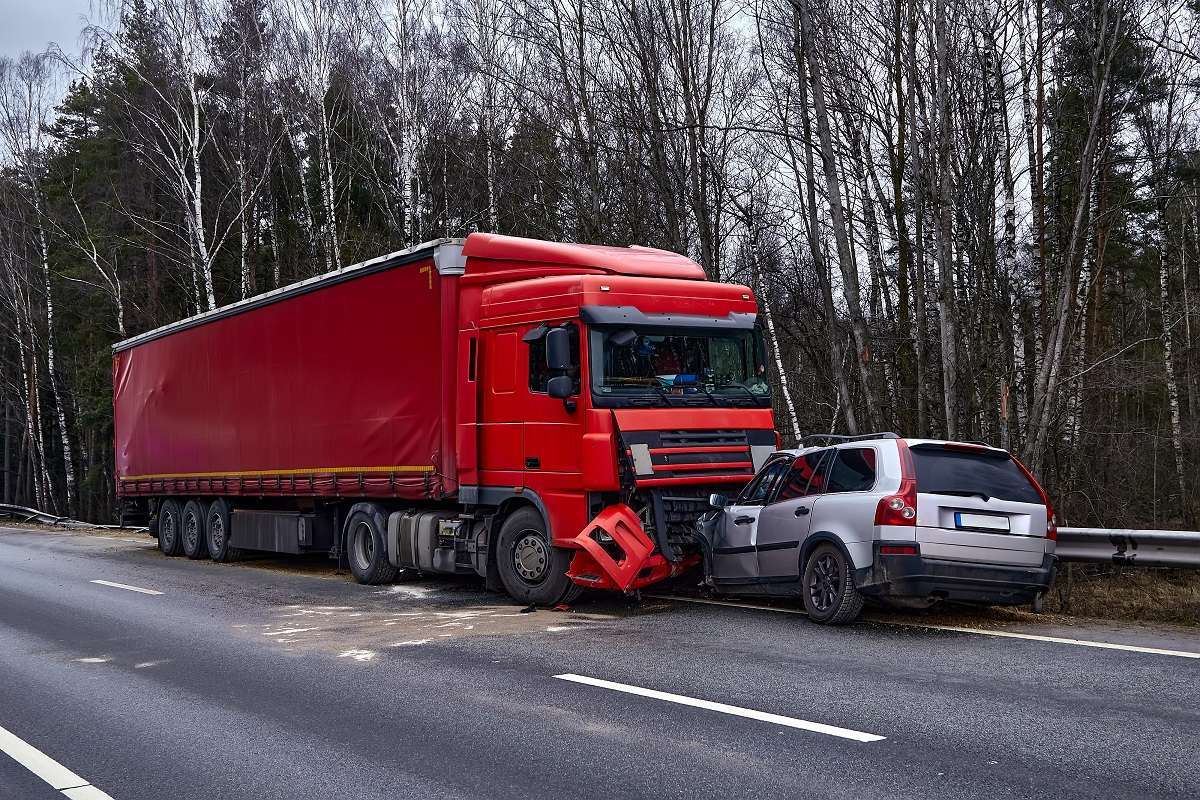
A collision with a fully loaded tractor trailer is not a fender bender with worse damage. It is a different kind of event, and it leaves families dealing with intensive care units, months out of work, and a trucking company whose investigators were on scene before the road reopened. An Austin truck accident lawyer at Ramos James Law levels that fight.
Ramos James Law represents people hurt in commercial truck and 18-wheeler crashes across Travis, Bastrop, Hays, Comal, and Williamson counties. We move fast on evidence, we look for every company that shares the blame, and we charge nothing unless we recover money for you.
Call +1 (512) 537-3369 now. Free consultation, 24/7, in English or Spanish.
Why these cases run on road rules instead of a police report

A truck claim is built on state and federal safety regulations, corporate records, and electronic data that a passenger car crash never involves, which is why the police report is only the starting point. That means more evidence, more defendants, and more insurance available, but only if someone demands the records before they are gone.
Travis County saw 646 crashes involving commercial motor vehicles in one recent year, and 13 people died in them, according to the Texas Department of Transportation, or TxDOT. Those cases rarely turn on the police report. They turn on a driver's logs, a dispatcher's messages, a maintenance file, and a black box.
The other side knows this. Major carriers keep rapid response teams on call precisely so their people reach the scene first. Your case starts at a disadvantage unless somebody starts working it immediately.
Who can be held responsible for an Austin truck crash?
Often more than one company. The driver is the obvious defendant, but the motor carrier that hired and dispatched him, the company that loaded the trailer, the shop that serviced the brakes, the broker that arranged the freight, and the owner of the tractor can each carry a share of the blame.
That matters for a practical reason. Each defendant usually brings its own insurance policy, and layering those policies is often the difference between a settlement that covers a spinal surgery and one that does not.
Carrier liability is also broader than most people expect. A trucking company can be on the hook for negligent hiring if it put a driver with a disqualifying record behind the wheel, for negligent supervision if it ignored hours-of-service violations, and for negligent maintenance if inspection records show a known defect. Sorting out proving liability in a truck accident is the core of the work.
What evidence disappears first after a truck accident?
The electronic data goes first, and some of it can be legally destroyed within months. Federal regulations set minimum retention periods, not maximum ones, and once the window closes a carrier can delete records that would have proven your case.
The table below shows what is on the clock. Actual timelines vary by carrier and equipment.
| Evidence | Typical window before it is gone | Why it decides cases |
| Post-crash alcohol test | 8 hours | Federal rules end testing attempts after this point |
| Post-crash drug test | 32 hours | Same rule, longer window, still very short |
| Engine control module data, the truck's black box | Days to weeks, or lost when the tractor is repaired | Speed, braking, throttle in the seconds before impact |
| Dashcam and forward-facing video | Days to weeks on a recording loop | Shows what the driver actually saw and did |
| Electronic logging device records | 6 months minimum retention | Proves fatigue and hours-of-service violations |
| The tractor and trailer themselves | Weeks, once released from the yard | Independent mechanical inspection |
| Your right to file suit | Generally 2 years from the crash date | Texas deadline, no exceptions in most cases |
The alcohol and drug testing windows come from 49 CFR 382.303, and the six-month log retention rule comes from 49 CFR 395.8(k). Your two-year filing deadline is set by Texas Civil Practice and Remedies Code section 16.003.
Notice the mismatch: two years to sue, roughly six months before the logs can lawfully vanish. That gap is why we send a formal demand, called a spoliation letter, within days of taking a case. Spoliation simply means the destruction of evidence. It puts the carrier on written notice that destroying evidence will have consequences in front of a jury. If you want the detail, we explain preserving evidence with a spoliation letter in plain language.
The clock started the day of your crash. Call +1 (512) 537-3369 for a free case review. Hablamos Español.
The federal rules that decide truck cases

Interstate trucking runs on regulations from the Federal Motor Carrier Safety Administration, or FMCSA, the federal agency that sets safety standards for commercial trucks. When a carrier breaks those rules and someone gets hurt, the violation becomes powerful evidence of negligence.
The hours-of-service rules are the ones that come up most. Under FMCSA regulations, a driver hauling freight:
- May drive a maximum of 11 hours after 10 consecutive hours off duty
- May not drive past the 14th hour after coming on duty
- Must take a 30-minute break after 8 cumulative hours of driving
- May not drive after 60 or 70 hours on duty across 7 or 8 days
Electronic logging devices, or ELDs, record that duty time automatically. They replaced paper logbooks precisely because paper was easy to falsify. When ELD data contradicts a driver's story, the case changes.
Federal law also requires interstate for-hire carriers hauling ordinary freight to carry at least $750,000 in liability coverage under 49 CFR 387.9. That is 25 times the $30,000 minimum a Texas driver has to carry, and it is one reason truck claims are worth pursuing properly.
How much is a truck accident claim worth in Texas?
The value depends on the severity of the injuries, the number of liable companies, and how much coverage sits behind each one. Truck cases tend to be worth substantially more than other motor vehicle accidents because the injuries are worse and the policies are larger, but no honest lawyer can quote a figure before reviewing medical records.
Texas lets you claim economic damages such as medical care, future treatment, lost wages, and lost earning capacity, along with non-economic damages for physical pain, mental anguish, disfigurement, and impairment. Where a carrier knowingly kept an unsafe driver on the road, Texas may also allow exemplary damages, which exist to punish a company rather than to compensate you.
Carriers have a standard playbook for shrinking that number: put a percentage of the blame on you. Texas allows it, because your share of fault comes straight off your recovery and past the halfway point it ends the claim. Defense teams in truck cases build that argument from day one, which is another reason the physical evidence has to be locked down early.
Freight corridors we know: I-35, US 290, and SH 130
We handle crashes on the routes Central Texas freight actually uses. I-35 through Southeast Austin carries constant truck traffic alongside commuter volume and long-running construction. SH 130 is the toll bypass that heavy trucks take around the city. US 290 and SH 71 feed traffic east toward Bastrop and west out of town, and Ben White Boulevard funnels trucks toward Austin-Bergstrom International Airport.
Knowing these roads matters when a case gets serious. Lane configurations, merge points, and construction zoning at the time of a crash can decide a liability fight, and Travis County juries know these roads too.
Why Central Texas families call Laura Ramos James
Laura Ramos James was an injury victim before she was an injury lawyer. That experience shaped a firm where clients get their calls returned, get their questions answered in the language they speak at home, and are treated as people rather than claim numbers.
She is the owner of Ramos James Law and a Latina trial attorney, recognized by Texas Super Lawyers, the National Trial Lawyers Top 100, the Multi-Million Dollar Advocates Forum, and Austin Monthly's Top Attorneys list.
She won a $1,273,000 jury verdict against a Hyatt hotel in a premises liability trial. Past results do not guarantee a similar outcome, and every case depends on its own facts.
Our values are not decoration. Advocacy means we prepare cases for trial. Integrity means we tell you when a case is not worth what you hoped.
Free consultation, no fee unless we win. Call +1 (512) 537-3369 any hour. Hablamos español.
How We Help You Seek Compensation
Here’s what our law firm does for you:

Investigate
We investigate. We prove fault. We build your case to show how much you’ve lost, and what you’re owed.

Negotiate
We negotiate with insurance companies who try to pay you less than you deserve. And if they won’t play fair, we take them to court.

Fight
We fight for your medical expenses, future medical costs, lost wages, physical impairment, and financial compensation so you can move forward.
Truck accident questions our Austin clients ask
Does the trucking company's insurance pay my medical bills while I am still treating?
Usually not right away. Liability insurers pay once at the end, in a lump sum, after fault is resolved. In the meantime your treatment is typically covered by your health insurance, your own auto policy, or a provider willing to wait for payment out of the settlement. We help arrange that care so treatment does not stop while the case is pending.
What if the truck driver blamed me for the crash?
A driver's version of events is not a verdict. Truck crashes leave physical evidence, electronic data, and often video that can contradict a driver's account, and Texas allows you to recover as long as you are not more than 50 percent responsible. Fault gets decided on the evidence, not on who spoke to the officer first.
What if the truck driver was an independent contractor and not an employee?
That label rarely ends the claim. Trucking companies frequently classify drivers as contractors, but federal leasing rules and Texas law can still place responsibility on the carrier whose authority the truck was operating under. The paperwork behind that arrangement, including the lease and the placards on the door, is one of the first things we request.
Can I still bring a claim if I was partly at fault for the truck crash?
Yes, as long as you are not found more than half responsible. Texas reduces your recovery by your percentage of fault rather than eliminating it, so a driver assigned 20 percent of the blame still recovers 80 percent of the case value. Carriers push that percentage hard, which is why the electronic data matters so much.
My family member died in a truck crash. Who can file the claim?
Texas limits wrongful death claims to the surviving spouse, children, and parents of the person who died, and any one of them may file for the benefit of all. Siblings and grandparents cannot bring the claim on their own.
There is also a second, separate claim, called a survival claim, that the estate can bring for what your loved one endured between the crash and death. We handle these quietly, and we will walk your family through every step in Spanish if that is easier.
The trucking company's insurer offered me money already. Should I take it?
Not before a lawyer reads it. Fast offers in truck cases usually arrive before anyone knows the full cost of treatment, and accepting one closes the claim permanently. In serious cases, an early offer often signals that the carrier already sees a liability problem it wants to close cheaply.
What if the truck that hit me was from out of state?
That is common and it does not block your claim. Interstate carriers must register with the FMCSA, maintain federal minimum insurance, and can generally be sued in Texas for a crash that happened here. We litigate against out-of-state carriers regularly.
Does it matter that I was driving for work when the truck hit me?
It can help. If you were on the job, you may have a claim against the trucking company and a separate source of recovery through your employer, depending on whether your employer carries workers' compensation. We handle injury claims for workers whose employers opted out of workers' compensation, which is legal in Texas and more common than people realize.
Talk to an Austin truck accident lawyer today

Every day that passes, another record moves closer to deletion. If a commercial truck injured you or someone you love anywhere in Central Texas, get someone working on it now.
Call Ramos James Law at +1 (512) 537-3369 for a free, no-obligation case review, available 24 hours a day. Our Austin office is at 2800 S I-35 Frontage Rd, Suite 265, right on the corridor where so many of these crashes happen. Hablamos español. No fee unless we win.