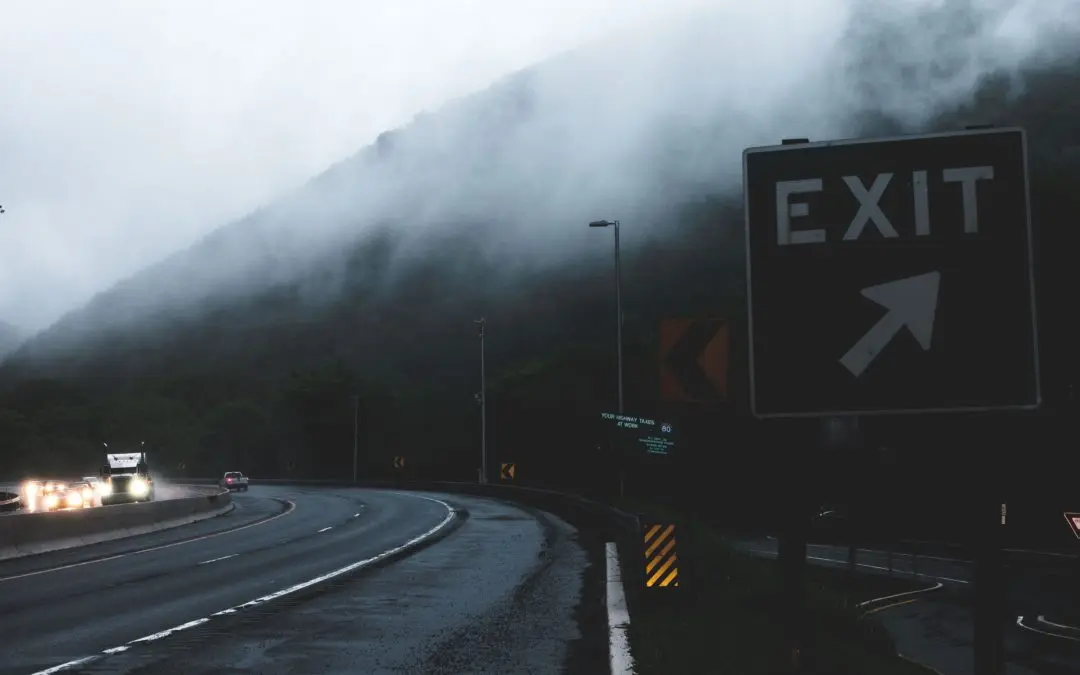
When fog rolls across Austin's highways, drivers who cause collisions often point to reduced visibility as their explanation. "I couldn't see" becomes the go-to response for rear-end crashes, multi-car pileups, and intersection collisions along I-35, Mopac, and SH-71.
But Texas law does not treat fog as an excuse for causing a crash. Instead, it views fog as a condition that requires drivers to be more careful. Driving too fast for conditions in Austin creates liability even when the driver stayed within the posted speed limit.
Texas Transportation Code § 545.351 requires drivers to travel at a speed that is reasonable and prudent for the conditions. The law also requires drivers to control their speed as necessary to avoid a collision.
A posted speed limit is not a safe target speed when fog cuts visibility. A driver who maintains highway speeds in dense fog and then says they could not see has essentially admitted to driving unsafely for the conditions.
Key Takeaways for Driving Too Fast for the Conditions in Austin
- Texas Transportation Code § 545.351 requires drivers to travel at a speed that is reasonable for the conditions and to control speed to avoid collisions, which means posted limits do not authorize unsafe speeds in fog.
- Fog does not excuse a collision under Texas law because drivers have a duty to slow down and increase following distance when visibility drops.
- The sudden emergency defense may be difficult to use in fog crashes if the fog was predictable for the area or if the driver's speed contributed to the problem.
- Rear-end collisions in reduced visibility often suggest that the following driver failed to keep a safe distance, although fault depends on the specific facts.
- Multi-car pileups on Austin highways often involve several negligent drivers, each of whom may share responsibility under Texas fault rules.
What Does Texas Law Say About Driving Too Fast for Conditions?
Texas law sets clear standards for safe speed that go beyond simply following posted limits. The law requires drivers to adjust their behavior based on actual road conditions, including weather and visibility.
The Reasonable and Prudent Speed Standard
Texas Transportation Code § 545.351 says that drivers may not travel faster than is reasonable and prudent under the circumstances. The law also requires drivers to control their speed as needed to avoid hitting any person or vehicle. This means the posted speed limit is a maximum for ideal conditions, not permission to drive that fast no matter what.
The law specifically calls for speed control in several situations:
- Approaching and crossing intersections
- Going around curves or approaching hilltops
- Traveling on narrow or winding roads
- When special hazards exist due to traffic or weather
Fog falls clearly into that last category. When visibility drops, drivers must respond by slowing down.
How Breaking This Law Affects Fault
When a driver breaks a safety law and that violation causes an injury, courts may treat the violation itself as evidence of careless driving. This means the injured person does not need separate proof that the driver acted unreasonably. The law violation speaks for itself.
A driver going 65 miles per hour in dense fog who rear-ends another vehicle has likely broken § 545.351. The issue is not whether they exceeded the posted limit. The issue is whether their speed was reasonable given how little they could see. Courts look at what a careful driver would have done in the same situation.
Why Fog Creates a Greater Responsibility
Some drivers believe that fog reduces their responsibility because they genuinely could not see what was ahead. Texas law sees it differently. When visibility drops, the duty to drive carefully actually increases because the danger is foreseeable and the right response is clear.
What a Careful Driver Does in Fog
Texas negligence law asks whether the driver acted the way a careful person would under the same circumstances. When fog reduces visibility, a careful driver recognizes the danger and responds. Safe driving in fog includes several important adjustments:
- Slowing down enough to stop within the visible distance
- Increasing the gap between vehicles substantially
- Using low-beam headlights instead of high beams that reflect off fog
- Avoiding sudden lane changes or hard braking when possible
A driver who keeps up normal highway speeds in these conditions has not met the standard of care. When that driver says they could not see, they have actually confirmed the problem. They were driving faster than conditions safely allowed. In practical terms, drivers need enough time and distance to stop within what they can see.
Fog Is Predictable in Central Texas
Austin and Travis County experience fog regularly, especially during the fall and winter months. Low-lying areas near Lady Bird Lake, sections of I-35 through downtown, and stretches of SH-71 near Austin-Bergstrom International Airport are known for morning fog.
Fog forms when the temperature and dew point come together, which happens often in Central Texas during certain seasons.
This predictability matters legally. Drivers cannot claim surprise when they encounter fog on familiar routes during fog-prone times. A careful driver checks weather conditions before traveling and adjusts their departure time or route when dense fog is in the forecast.
Does the Sudden Emergency Defense Work in Fog Accidents?
Drivers who cause fog-related crashes sometimes argue that the reduced visibility created an unexpected emergency beyond their control. Texas law does recognize this defense, but it faces real obstacles in weather-related collisions.
What the Defense Requires
Texas law only allows this defense when the situation was truly unexpected and not caused by the driver's own actions. The driver must also show they responded the way a careful person would have under those sudden circumstances.
Fog often does not meet the "unexpected" requirement. Weather forecasts predict fog with reasonable accuracy, and Austin drivers know which areas and times tend to have visibility problems. A driver who encounters fog on their usual morning commute along a route known for fog may have trouble arguing that the situation caught them off guard.
When Drivers Create Their Own Problem
Even if fog develops suddenly, a driver who was already going too fast for conditions has created their own emergency. The sudden emergency defense does not protect a driver whose unsafe speed left them unable to respond to a predictable hazard.
Consider a driver going 70 miles per hour on I-35 who enters a fog bank and rear-ends a slower vehicle. In many cases, the real issue is not the fog itself. The real issue is whether the driver adjusted their speed for the conditions. The fog simply made the consequences of that choice visible.
How Is Fault Decided in Rear-End Collisions During Fog?
Rear-end collisions often suggest that the following driver failed to keep a safe distance. This is true even when fog played a role in the crash. Fog does not automatically change who bears responsibility.
The Duty to Keep a Safe Following Distance
Texas Transportation Code § 545.062 requires drivers following another vehicle to maintain enough distance to stop safely without colliding. The law says drivers must consider their speed, traffic, and conditions when judging that distance. When visibility decreases, the safe following distance must increase.
A driver following at two seconds of distance in clear conditions may need four, six, or even more seconds of distance in dense fog. The standard is practical: the driver must be able to stop without hitting the vehicle ahead.
Challenging the Fault Finding
The following driver in a rear-end collision may try to show that the lead vehicle stopped suddenly without warning. They may also point to some other factor beyond their control. Fog alone does not shift responsibility away from the following driver.
If anything, fog strengthens the case that the following driver was at fault. A driver who was keeping a safe distance for the conditions would have been able to stop. The collision itself suggests the following driver was either too close or going too fast for the visibility.
Who Is Responsible in Multi-Car Fog Pileups?
Chain-reaction crashes in fog raise complicated questions because multiple drivers may have contributed to the collision through various unsafe actions. Texas uses comparative fault rules to divide responsibility among all parties.
How Fault Gets Divided
In a multi-car pileup, each driver who contributed to the crash may bear a share of the fault. The first driver who caused the initial collision likely carries significant responsibility. But drivers who came after and failed to stop in time may also share fault. Each collision in the chain gets analyzed separately.
Several factors affect how fault gets divided in pileups:
- How fast each vehicle was traveling before impact
- How much following distance each driver maintained
- Whether each driver tried to take evasive action
- Whether any driver was distracted or using a phone
Gathering Evidence in Complex Fog Crashes
Figuring out fault in pileups requires careful investigation. Event data recorders in modern vehicles may capture speed and braking information from the seconds before impact. Statements from other drivers and passengers help establish the order of collisions. Skid marks and damage patterns provide physical evidence of speeds and impact angles.
The fog conditions at the time of the crash must be documented, too. Weather service records, nearby traffic camera footage, and testimony from other drivers on the same route may show how dense the fog was and how far visibility had dropped.
What Evidence Helps Prove Negligence in Fog Accidents?
Building a strong case after a fog-related crash requires evidence showing the at-fault driver failed to adjust their behavior for the conditions. Several types of evidence prove especially helpful.
Documenting the Weather
Official weather records establish what conditions were like at the time and location of the crash. The National Weather Service keeps historical data, and local news stations often save weather reports and fog advisories. This documentation prevents the other driver from downplaying how bad the visibility actually was.
Photos from the scene, if taken shortly after the crash, may capture lingering fog or wet conditions. Dash camera footage from other vehicles on the same route provides particularly strong evidence of what visibility was like.
Vehicle Data and Physical Evidence
Modern vehicles record data that may show how fast the at-fault driver was going before impact and whether they hit the brakes. Crash reconstruction specialists analyze damage patterns and physical evidence to estimate speeds and figure out what happened.
Police reports often include the officer's observations about weather conditions and any tickets issued for driving too fast for conditions. While the report alone does not decide fault, a citation shows the officer believed speed was a problem.
FAQs for Proving Negligence in Austin Fog Accidents
Does Texas have fog warning systems on highways?
The Texas Department of Transportation operates electronic message signs on major highways. These signs may display weather or hazard messages when conditions call for it. A driver who ignores a posted warning faces stronger evidence that they knew about the hazard and failed to respond.
How does shared fault affect my recovery if I was also driving in the fog?
Texas follows a modified comparative fault system under Civil Practice and Remedies Code § 33.001. If you were also going faster than conditions allowed, your share of fault reduces your recovery by that percentage. However, if your fault is 50% or less, you may still recover damages from other at-fault parties. Simply being on the road during fog does not automatically make you partly responsible.
What if the at-fault driver says their brakes failed because of wet conditions?
Drivers have a duty to keep their vehicles in safe working condition. If wet conditions caused brake failure, the driver may still be responsible for not maintaining their brakes properly. They may also be responsible for driving at speeds that exceeded their braking ability in those conditions.
Equipment problems rarely eliminate responsibility entirely.
Are truck drivers held to different standards in fog?
Commercial drivers must follow federal regulations that require them to operate safely for conditions. The Federal Motor Carrier Safety Administration sets standards that may be stricter than those for regular drivers. Trucking companies may also share responsibility if they pushed drivers to keep schedules despite dangerous weather.
How long do I have to file a claim after a fog-related accident in Austin?
Texas Civil Practice and Remedies Code § 16.003 sets a two-year deadline for most Austin personal injury claims. This deadline runs from the date of the accident, which makes prompt investigation and evidence gathering important.
When Weather Becomes a Legal Question
Fog does not free drivers from responsibility for the crashes they cause. Under Texas law, reduced visibility creates a greater duty to drive carefully, not an excuse for unsafe driving. A driver who says "I couldn't see" has often admitted to the very problem that makes them responsible.
Ramos James Law helps Austin residents pursue fair compensation after fog-related crashes. Our team investigates weather conditions, gathers vehicle data, and documents how the at-fault driver failed to meet their duty under the law.
Reach out to discuss your situation through a free consultation. There are no fees unless the case results in a recovery. Hablamos Español.